

Is There A Correct Way To Install A Fence? (Pro Tips 2026)
If you have ever looked at a leaning fence and wondered where it all went wrong, you are not alone. Many people ask us the same question: is there a correct way to install a fence? The short answer is YES. There is a right way, and there are plenty of wrong ways. At King Of Kings Fence in Dallas, we have seen fences fail because someone skipped a step or rushed the job.
A fence is a long-term investment. Done right, it can last decades and boost your property value. Done wrong, it becomes a headache that costs more to fix than it would have to build correctly the first time. In this guide, we will walk you through the proper process, the tools you need, and the mistakes to avoid.
What Is the Correct Way to Install a Fence?
The correct way to install a fence follows a clear sequence. You cannot skip around and hope for the best. Every step builds on the one before it. From planning your layout to setting posts and attaching panels, order matters. Below is the general process we use on almost every job, whether it is a wood privacy fence or a wrought iron fence.
- Check property lines and permits. Know exactly where your property ends. Call to locate underground utilities before you dig. In Dallas and surrounding cities, some fence types require permits.
- Plan your layout. Mark corners and gate locations. Run a string line so your fence stays straight.
- Measure and mark post spacing. Most fences use 6 to 8 foot spacing between posts. Keep it consistent.
- Dig the post holes. Depth and width depend on soil and fence height. More on that later.
- Set the corner and gate posts first. These anchor the whole fence. Get them plumb and level.
- Set the line posts. Use your string line to keep them all aligned.
- Let the concrete cure. Do not rush this. Give it time to harden before adding weight.
- Attach rails and pickets. Work from one end to the other, checking level as you go.
- Install gates and hardware. Make sure gates swing or slide freely without dragging.
- Add finishing touches. Trim the tops, seal or stain wood, and clean up the site.
Follow these steps in order and you will end up with a fence that stands straight and strong. Skip a step and you invite trouble down the road.
What Tools and Materials Do You Need for Fence Installation?
Having the right tools makes the job faster and the results better. You do not need a warehouse full of gear, but you do need the basics. The exact materials depend on the type of fence you are building. A chainlink fence needs different parts than a ranch style wood fence. Here is a solid starter list for most residential fence projects.
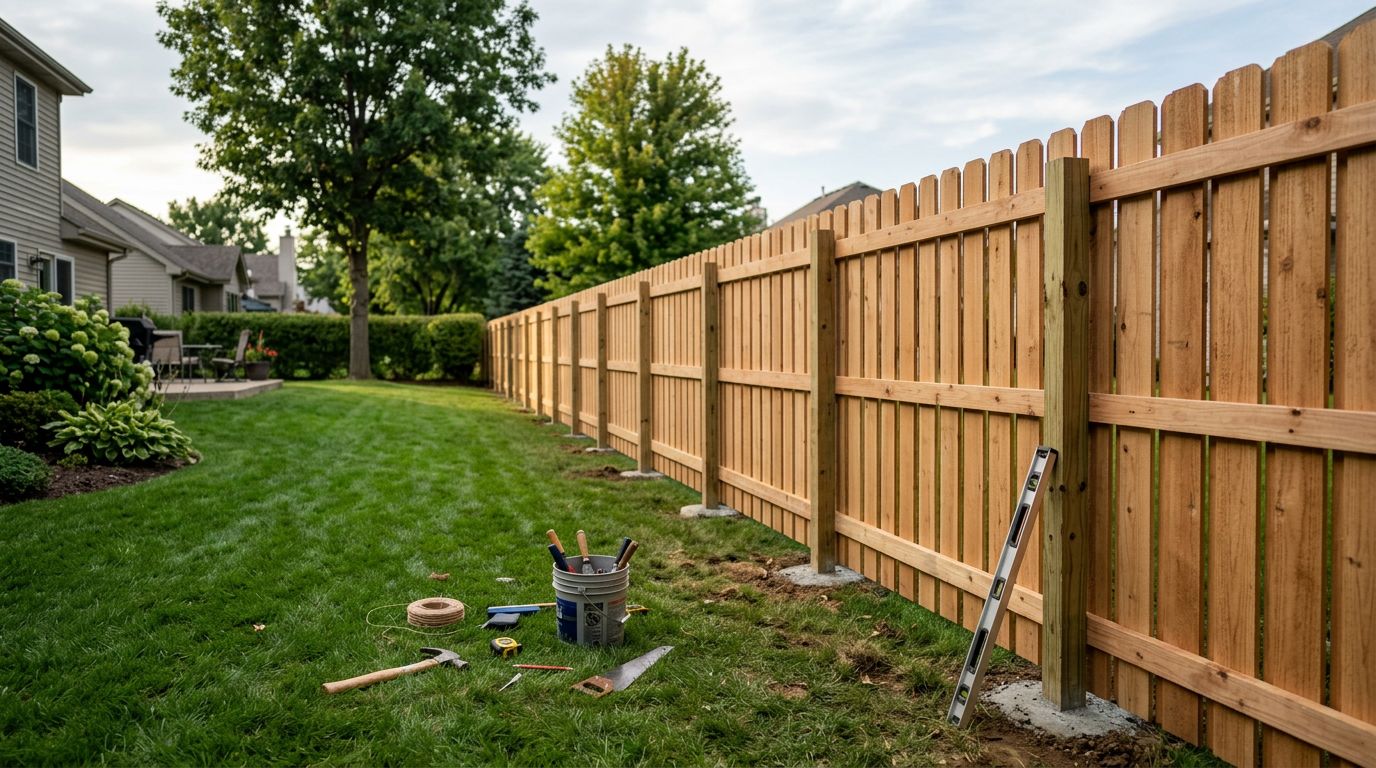
- Post hole digger or power auger for digging clean, deep holes
- Shovel for cleanup and adjusting dirt
- Level to keep posts plumb and rails straight
- Tape measure for spacing and heights
- String line and stakes to keep everything aligned
- Circular saw or reciprocating saw for cutting wood or metal
- Drill and screws or a nail gun for attaching pickets
- Concrete mix to set the posts
- Wheelbarrow for mixing and hauling concrete
- Fence posts in wood, metal, or vinyl depending on your design
- Rails and pickets or panels for the body of the fence
- Gate hardware including hinges, latches, and for automatic gates the motor and controls
- Safety gear such as gloves, eye protection, and work boots
If you plan to add an electric gate, sliding gate, or swing gate, you will also need electrical components and often a professional to wire it safely. Automatic gate installation is not a place to cut corners.
How Deep Should Fence Posts Be Set?
Post depth is the single most important factor for a fence that lasts. Too shallow and the fence will lean or fall over in the first strong wind. The general rule is that at least one third of the post should be underground. So a 6 foot tall fence usually needs posts set about 2 to 3 feet deep. But depth also depends on a few other things.
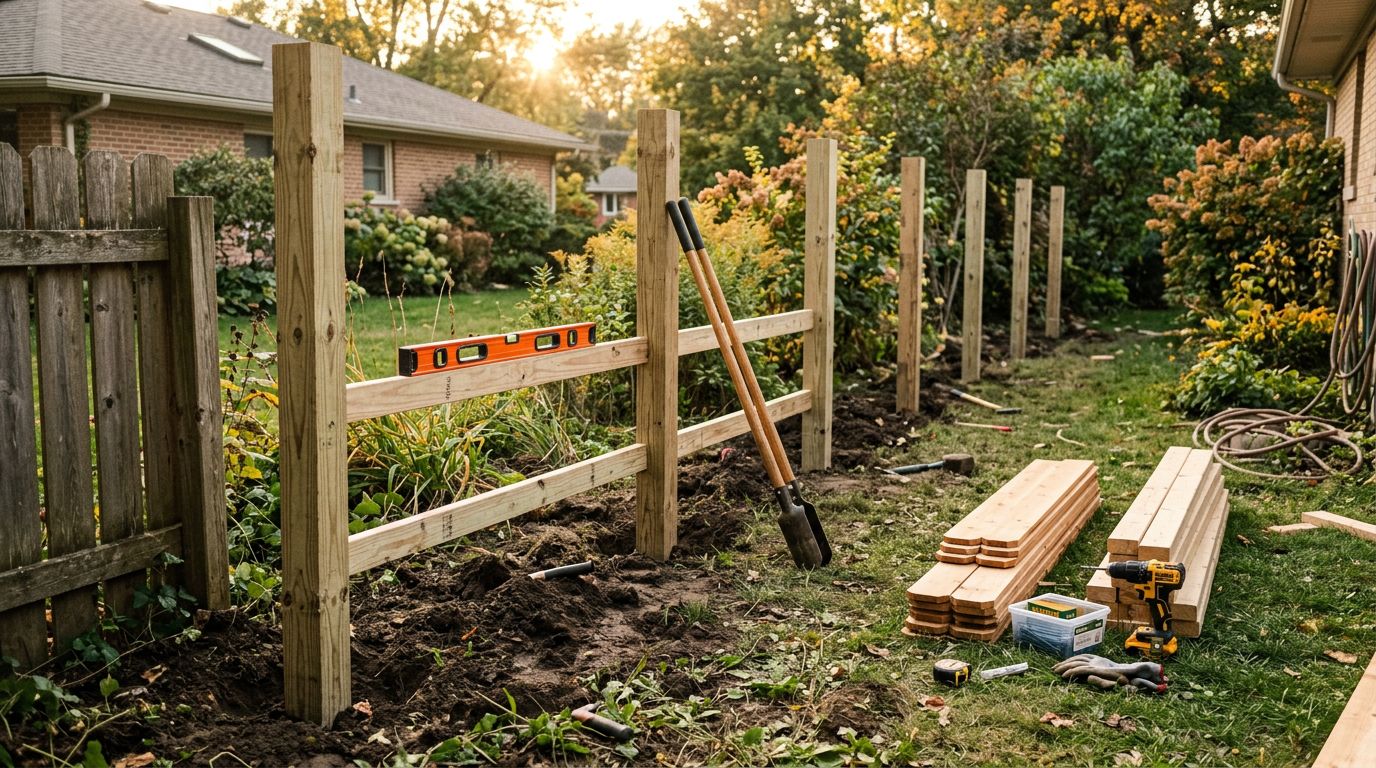
Soil Type Matters
Dallas soil is famous for its clay content. Clay shifts and expands with moisture. In loose or sandy soil, you may need to dig deeper for a firm hold. In dense clay, proper drainage at the bottom of the hole helps prevent heaving. We always account for local soil conditions on every job.
Fence Height Changes the Math
The taller the fence, the deeper the posts. A tall privacy fence catches more wind than a short garden fence. That wind load pushes on the posts. Deeper posts resist that force. For an 8 foot fence, we often set posts 3 feet deep or more.
Frost Line and Weather
In colder regions, posts must go below the frost line so freezing ground does not push them up. Dallas winters are mild, so frost is less of an issue here. Still, we set posts deep enough to handle any seasonal ground movement.
Gate Posts Need Extra Depth
Gate posts carry more weight and stress than regular line posts. A gate opens and closes hundreds of times. We set gate posts deeper and use more concrete to keep them rock solid. This is ESPECIALLY true for heavy automatic and sliding gates.
How Do You Set Fence Posts in Concrete Correctly?
Setting posts in concrete is what gives a fence its strength. Done right, the concrete anchors each post like a tree root. Done wrong, water pools around the wood and rots it out. Here is the process we follow to set posts that stay put for years.
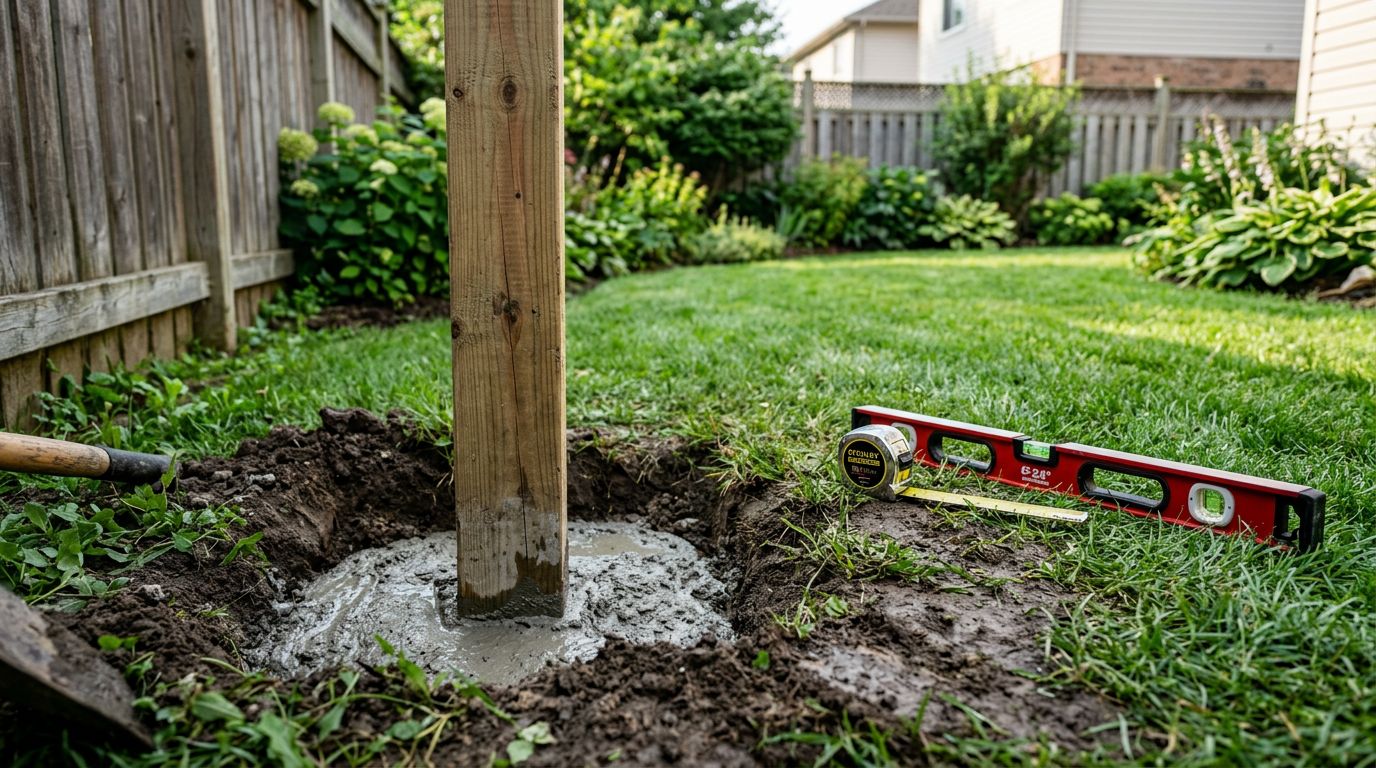
- Dig the hole to the right depth and width. The hole should be about three times wider than the post. Deeper is better for stability.
- Add gravel at the bottom. A few inches of gravel helps water drain away from the base of the post. This prevents rot in wood posts.
- Place the post in the hole. Center it and check that it is plumb on all sides using a level.
- Brace the post. Use scrap lumber to hold the post in place while you work. This keeps it from shifting.
- Pour in the dry concrete mix. For many projects, fast-setting concrete works well. Follow the bag instructions for your mix.
- Add water. Some mixes let you pour water right into the hole. Others need mixing first. Do it right for your product.
- Slope the top of the concrete. Shape the concrete so it slopes away from the post. This sheds water instead of holding it.
- Recheck plumb. Before the concrete hardens, verify the post is still straight. Adjust if needed.
- Let it cure. Give the concrete time to set fully. Do not hang panels or gates until it is ready.
Patience here pays off big. We tell every customer the same thing. If you rush the curing time, you undo all the careful work you just did. Let it set.
What Are Common Fence Installation Mistakes to Avoid?
Over the years we have been called out to fix fences that other people installed. Almost every failure traces back to a handful of common mistakes. Knowing what NOT to do is just as valuable as knowing what to do. Watch out for these errors.
- Setting posts too shallow. This is the number one cause of leaning fences. Depth is everything.
- Skipping the utility check. Digging into a gas line or cable is dangerous and expensive. Always locate utilities first.
- Ignoring property lines. Building on your neighbor’s land leads to disputes and sometimes tearing the fence down.
- Not using a string line. Without it, posts drift out of alignment and the fence looks crooked.
- Rushing the concrete cure. Hanging weight too soon lets posts shift before they set.
- Using the wrong materials. Untreated wood in ground contact rots fast. Use materials rated for the job.
- Inconsistent post spacing. Uneven spacing weakens the structure and looks sloppy.
- Forgetting drainage. No gravel means water sits at the post base and causes rot.
- Underbuilding gate posts. Gates get heavy use. Weak gate posts sag and drag within months.
- Skipping stain or sealant on wood. Unsealed wood weathers, cracks, and grays quickly. A little protection goes a long way.
Avoid these and you are already ahead of most do-it-yourself projects. If any of these feel overwhelming, that is a good sign it may be time to call in help.
Should You Install a Fence Yourself or Hire a Pro?
This is the big question. The honest answer depends on your skills, your time, and the type of fence. Let us break it down so you can decide what makes sense for you.
When DIY Might Work
If you are handy, have the right tools, and are building a simple fence, doing it yourself can save money. A short chainlink or a basic wood fence on flat ground is doable for a determined homeowner. Just be ready to spend a weekend or two on it. And be honest about your comfort with digging, mixing concrete, and keeping lines straight.
When to Hire a Pro
Some projects really call for a professional. Wrought iron fences are heavy and need welding know-how. Ranch style wood fences over uneven terrain take experience to look right. And anything with an electric gate, sliding gate, or swing gate involves motors and wiring that must be done safely. Automatic gate installation is best left to people who do it every day.
A pro also handles the details you might not think about. We check permits, locate utilities, and know how deep to set posts for our local Dallas soil. We serve homeowners across Dallas, Richardson, Garland, Mesquite, Addison, Irving, Carrollton, and Farmers Branch, so we know the ground and the rules in each area.
Think About the Long View
A DIY fence that fails in two years costs more than a pro fence built once. Factor in your time, the tools you may need to buy or rent, and the risk of mistakes. Sometimes the smart move is to let experts handle it while you spend your weekend doing something else.
Do Not Forget Maintenance
Even a perfect install needs care over time. Wood fences benefit from staining and washing to stay strong and good looking. Repairs happen when storms or age take their toll. We offer fence repairs, fence staining, and fence washing so your fence keeps looking its best for years. We even handle junk removal and tree removal when clearing the way for a new fence.
Conclusion
So, is there a correct way to install a fence? Absolutely. It comes down to planning carefully, using the right tools and materials, setting posts deep enough, anchoring them properly in concrete, and avoiding the common mistakes that sink so many projects. Get those things right and your fence will stand strong for a very long time.
Whether you tackle it yourself or bring in a professional, do it the RIGHT way the first time. If you want a fence built to last without the guesswork, King Of Kings Fence is here to help across the Dallas area. Reach out today and let us build something that lasts.


