

Is A Sliding Gate Better Than A Swing Gate? (2026 Comparison)
Choosing a driveway gate is a big decision, and one of the first questions we hear from homeowners is simple: is a sliding gate better than a swing gate? The honest answer is that it DEPENDS on your property, your budget, and how you want the gate to function day to day. Both options have real strengths and a few tradeoffs worth knowing before you commit.
At King Of Kings Fence in Dallas, we install both sliding and swing gates across the metro area, so we get to see how each type performs in the real world. In this 2026 comparison, we break down the differences, the costs, the security angles, and the maintenance so you can make a confident choice for your home or business.
What Is the Difference Between a Sliding Gate and a Swing Gate?
The core difference comes down to HOW the gate opens. A swing gate works like a door. It pivots on hinges and swings inward or outward to open. A sliding gate moves sideways along a track or on a cantilever system, sliding parallel to your fence line rather than swinging into your driveway or yard.
That single difference affects almost everything else, from the space you need to the cost you pay. Here is a quick breakdown of how the two compare on the basics.
- Opening motion: Swing gates pivot on hinges; sliding gates glide sideways.
- Space needed: Swing gates need clear space in front of or behind them; sliding gates need space along the fence for the gate to retract.
- Best driveway type: Swing gates suit flat, wide driveways; sliding gates suit tight or sloped driveways.
- Number of panels: Swing gates often come as single or double panels; sliding gates are usually one long panel.
- Automation: Both can be automated, but the motor systems differ.
- Visual style: Swing gates offer a classic, traditional look; sliding gates lean modern and functional.
Which Gate Type Is Better for Small or Sloped Driveways?
Space and terrain matter A LOT when picking a gate. If your driveway is short, narrow, or climbs a hill, one option will usually make more sense than the other. Let us walk through the common scenarios we see across Dallas, Richardson, and Garland.
Small or Tight Driveways
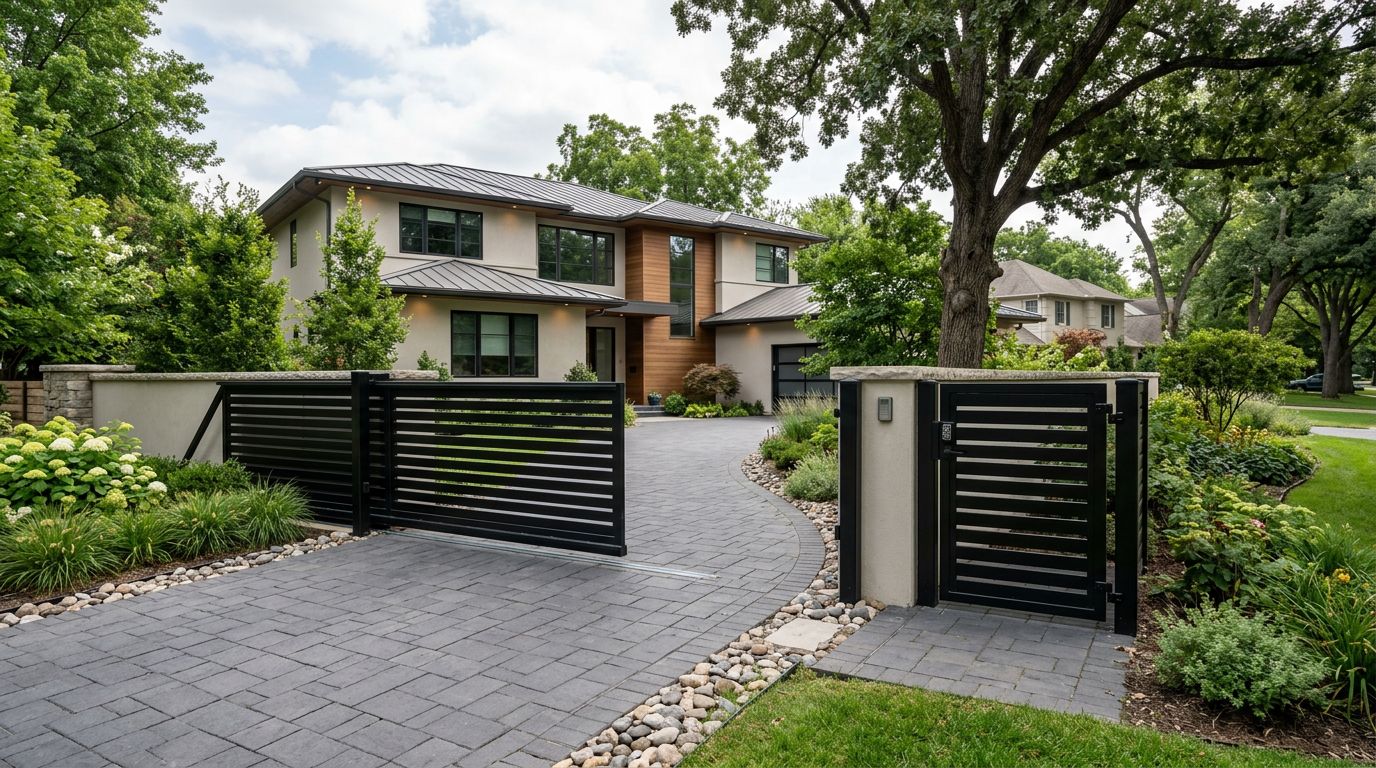
Sliding gates are usually the winner here. A swing gate needs room to open, and if your driveway is short, a swinging panel can eat into the space where you park. A sliding gate stays flush with the fence line as it opens, so you never lose driveway room. For homes where a car might sit close to the gate, sliding is often the practical pick.
Sloped Driveways
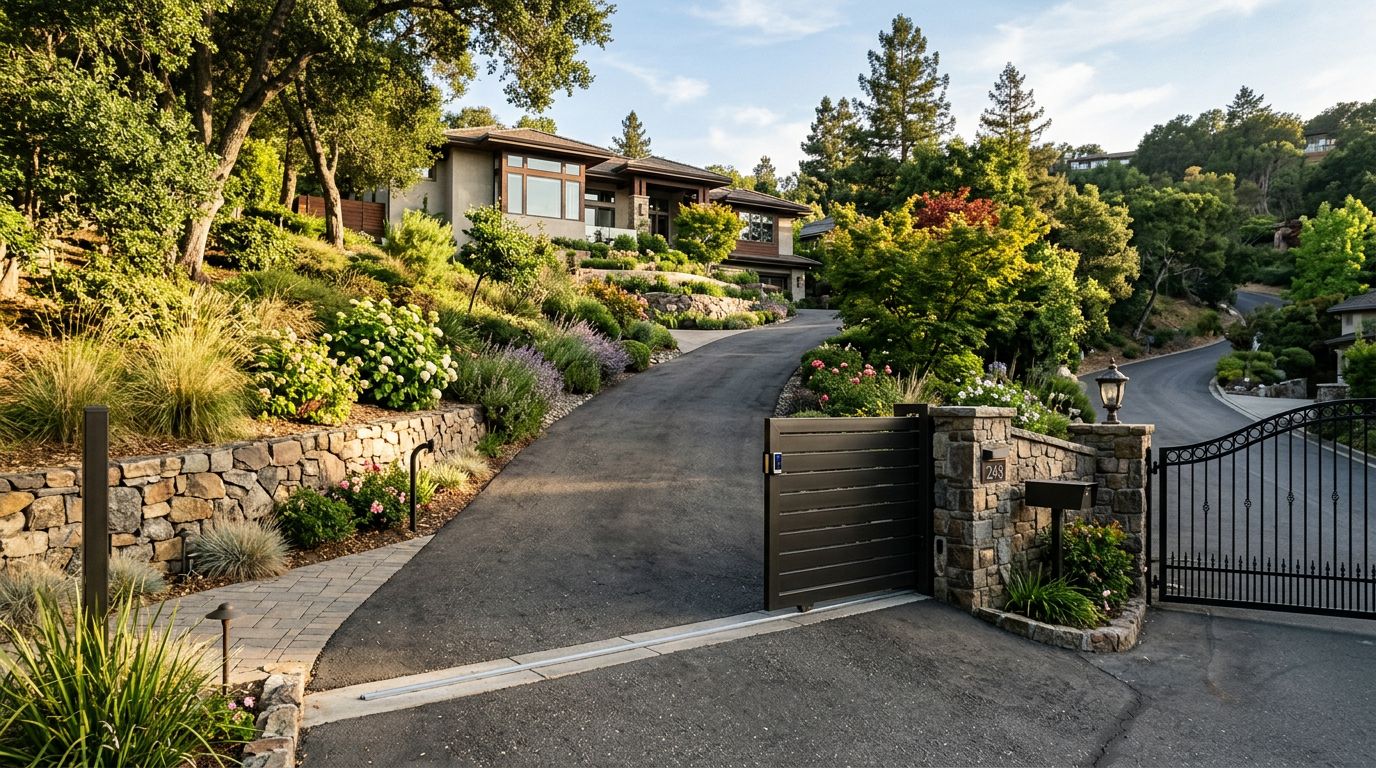
Slope is where swing gates struggle. If your driveway rises uphill, a swing gate that opens inward can catch on the pavement as it swings. That leads to gates that only open partway or drag on the ground. Sliding gates avoid this problem because they move sideways along a level track, not up and over a grade. On a sloped lot, a sliding gate is often the smarter engineering choice.
Wide, Flat Driveways
When you have plenty of flat space, swing gates shine. A double swing gate can create a grand, welcoming entrance with a classic look. There is no long fence run needed for the gate to retract into, so you get flexibility on placement and design. If your property is spacious and level, both options work, and the choice comes down to style and budget.
Limited Fence Run
Sliding gates need somewhere to GO when they open. That means you need clear space along the fence for the panel to slide into. If your fence line is short or blocked by landscaping, a shed, or a wall, a sliding gate may not fit well. In that case, a swing gate is often the better answer.
How Do Sliding and Swing Gates Compare on Cost in 2026?
Cost is always part of the conversation. In general, swing gates tend to be more affordable up front because the hardware is simpler and installation is often quicker. Sliding gates can cost more because of the track, rollers or cantilever system, and the heavier-duty motor needed to move a long panel. That said, prices vary based on materials, size, automation, and site conditions. The table below gives a general side-by-side view for 2026 planning.
| Factor | Swing Gate | Sliding Gate |
|---|---|---|
| Up-front cost | Generally lower | Generally higher |
| Installation complexity | Simpler, faster | More involved |
| Automation hardware | Lighter-duty motor | Heavier-duty motor |
| Site prep | Minimal | May need track or level base |
| Long-term value | Strong for flat lots | Strong for tight or sloped lots |
Keep in mind these are general trends, not fixed quotes. The final price depends on the gate material you choose, such as wrought iron or wood, the width of your opening, and whether you add automation. We always recommend an on-site look so the estimate reflects your ACTUAL property.
Which Gate Is More Secure: Sliding or Swing?
Security is a top reason people install a gate in the first place. Both types can be very secure, but they protect your property in slightly different ways. Here is how they stack up.
Forced Entry Resistance
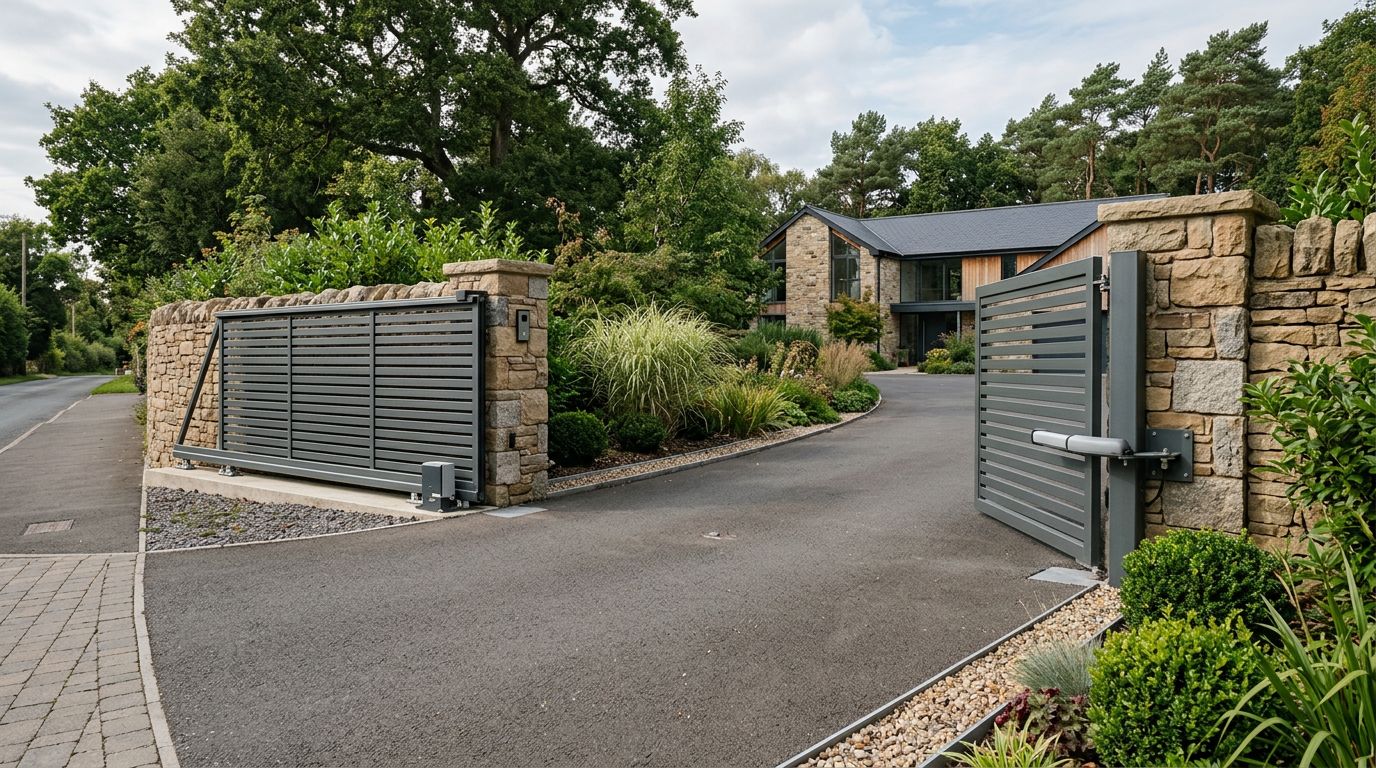
Sliding gates are often seen as tough to force open because they move along a track and do not have a simple hinge point to pry. A well-built sliding gate resists being pushed inward. Swing gates can be extremely secure too, especially with heavy hinges and a solid locking system, but the hinge and latch points are areas worth reinforcing.
Height and Visibility
Both gate types can be built tall and paired with materials that limit visibility or climbing. Wrought iron adds a strong, hard-to-climb look, while wood gives privacy. The security here comes more from the material and height than from whether the gate slides or swings.
Automation and Access Control
Automatic and electric gates add another layer of security. With automation, the gate closes behind you and stays locked without you having to get out of your car. Both sliding and swing gates can be automated with keypads, remotes, or sensors. The choice of gate type does not limit your access-control options much.
The Practical Verdict
For raw security, many people give a slight edge to sliding gates because of the track design. But a properly installed swing gate with quality hardware is more than capable of protecting your home. The bigger security factors are build quality, material, and how the gate is installed, not just the opening style.
What Are the Maintenance Requirements for Each Gate Type?
Every gate needs a little care to keep it working smoothly for years. The maintenance tasks differ slightly between the two designs. Sliding gates have moving parts along a track, so keeping that path clear is key. Swing gates rely on hinges, so those need attention. Below are the main upkeep items to plan for.
- Sliding gate track: Keep the track clear of dirt, leaves, and debris so the gate glides freely.
- Sliding gate rollers: Inspect rollers and wheels for wear and clean them periodically.
- Swing gate hinges: Lubricate hinges so the gate opens without squeaking or sagging.
- Swing gate alignment: Check that the gate hangs level and the latch lines up correctly.
- Automation checks: Test motors, sensors, and remotes on both types to catch small issues early.
- Rust and finish care: For wrought iron, watch for rust; for wood, plan for staining and sealing over time.
- General cleaning: Wash the gate to keep it looking sharp and to spot damage.
Both gates are low maintenance overall when installed correctly. A little seasonal attention goes a long way. We also offer fence staining, washing, and repairs, so upkeep for your gate and fence can be handled together.
Which Gate Should You Choose for Your Property?
There is no single right answer for everyone. The best gate for you comes down to your driveway, your budget, your security needs, and the look you want. To help you decide, walk through these steps in order. They mirror the way we help homeowners across Dallas, Mesquite, Addison, Irving, Carrollton, and Farmers Branch think it through.
- Measure your driveway. Note the width and length, and whether a swing gate would block parking space.
- Check the slope. If your driveway climbs, a sliding gate usually avoids dragging issues.
- Look at your fence run. Make sure there is clear room for a sliding gate to retract, or lean toward a swing gate.
- Set your budget. Swing gates often cost less up front; sliding gates may cost more but solve tricky sites.
- Decide on the look. Choose the style and material, such as wrought iron for a classic look or wood for privacy.
- Plan for automation. Decide if you want an automatic or electric gate for convenience and added security.
- Get a professional assessment. A pro can spot site issues you might miss and recommend the right fit.
If your lot is flat and wide with a classic style in mind, a swing gate is a great pick. If your driveway is tight, short, or sloped, a sliding gate often makes life easier. Many homeowners find the decision becomes obvious once they measure the space and think about how they will actually use the gate every day.
Conclusion
So, is a sliding gate better than a swing gate? Neither one is universally better. Sliding gates win on tight and sloped driveways and offer a slight security edge, while swing gates are budget-friendly and shine on flat, spacious lots with a classic look. The right choice depends on your space, your slope, your budget, and your style.
At King Of Kings Fence, we install sliding gates, swing gates, automatic gates, and electric gates throughout the Dallas area, along with full fence installation and repair services. If you are ready to add a gate that fits your property perfectly, reach out to our team and let us help you pick the option that works best for your home.


