How to Repair Wrought Iron Fence (Complete Guide 2026)
Wrought iron fences add timeless elegance to any property, but they require regular maintenance to keep them looking their best. Whether you’re dealing with rust spots, broken pickets, or loose joints, knowing how to repair wrought iron fence issues can save you hundreds of dollars in professional repair costs.
We’ve seen countless wrought iron fences throughout Dallas, Richardson, Garland, and surrounding areas that could have been saved with proper maintenance and timely repairs. The good news? Most wrought iron fence repairs are manageable DIY projects if you have the right tools, materials, and know-how.
What Tools and Materials Do You Need for Wrought Iron Fence Repair
Before diving into any wrought iron fence repair project, you’ll need to gather the proper tools and materials. Having everything on hand before you start will make the process smoother and help you avoid multiple trips to the hardware store. The specific items you need will depend on the extent of damage, but here’s a comprehensive list that covers most repair scenarios. EPA lead safety guidelines
- Wire brushes — both hand-held and drill attachments for rust removal
- Sandpaper — various grits from coarse (60-80) to fine (220-320)
- Angle grinder with cutting and grinding discs
- Welding equipment — MIG or stick welder with appropriate rods
- Safety gear — welding helmet, safety glasses, work gloves, dust masks
- Rust converter or naval jelly for stubborn rust spots
- Metal primer specifically designed for iron surfaces
- High-quality metal paint in your desired color
- Replacement iron pieces — pickets, rails, or decorative elements
- Metal files and rasps for smoothing welded joints
- Drop cloths and plastic sheeting to protect surrounding areas
- Measuring tape and level for proper alignment
How to Assess Rust and Damage on Your Wrought Iron Fence
Visual Inspection Techniques
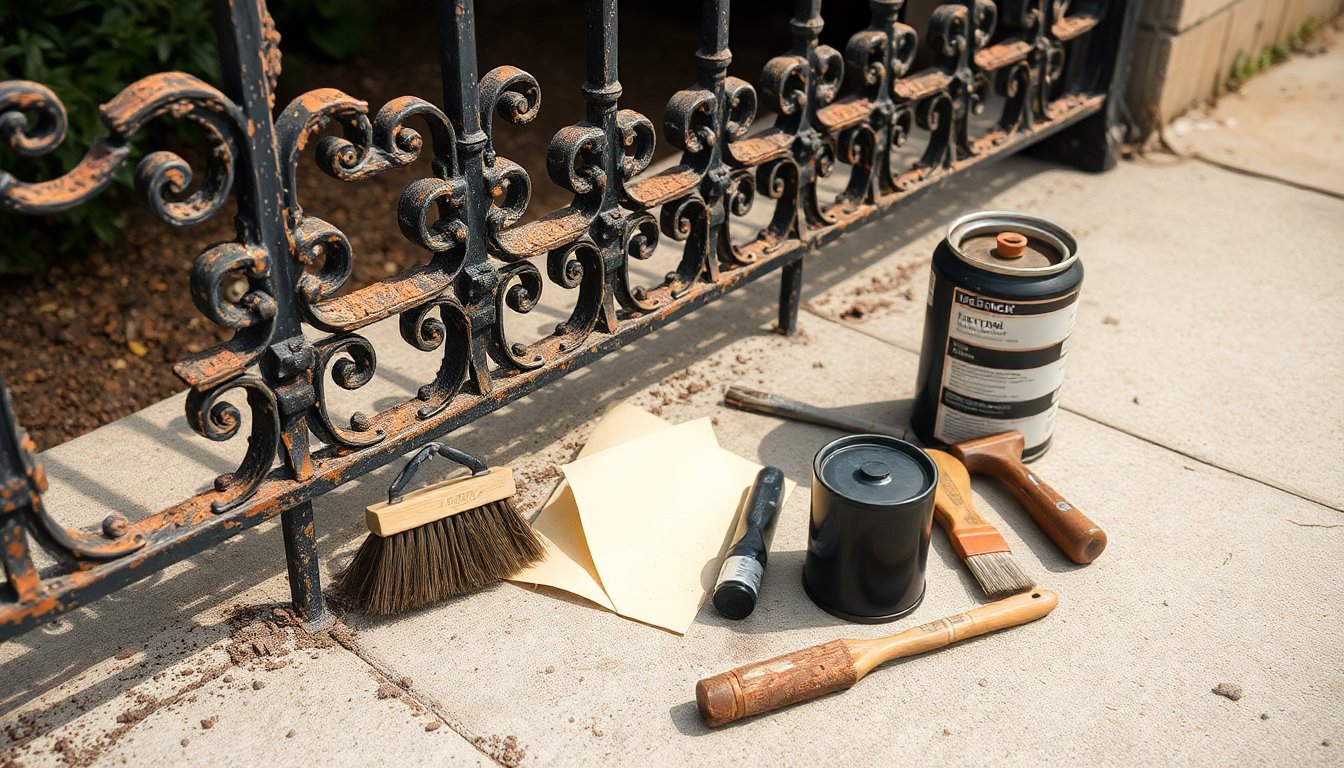
Start your assessment by walking the entire perimeter of your fence during daylight hours. Look for obvious signs of rust, which typically appears as reddish-brown staining or flaking metal. Pay special attention to joints, welds, and areas where water might collect — these spots are PRIME candidates for rust development.
Don’t just look at eye level. Crouch down to examine the bottom rails and posts, which often suffer the most damage from ground moisture and debris accumulation. Similarly, check the top sections where rain and snow can pool in decorative elements.
Testing Structural Integrity
Gently shake fence sections to identify loose connections or weakened joints. A solid wrought iron fence shouldn’t have any significant movement when pressure is applied. If you notice wobbling or hear rattling sounds, mark these areas for closer inspection.
Use a small hammer or metal tool to tap along the fence rails and pickets. Solid metal will produce a clear, ringing sound, while severely rusted or damaged sections will sound dull or hollow. This technique helps you identify problems that might not be visible on the surface.
Categorizing Damage Severity
Surface rust appears as light discoloration and can usually be removed with wire brushing and sanding. This type of damage is purely cosmetic and doesn’t affect structural integrity — yet.
Moderate rust penetrates deeper into the metal, creating pitting and rough surfaces. You’ll need more aggressive removal techniques, but the underlying structure remains sound.
Severe rust or corrosion creates holes, significant metal loss, or structural weakness. These areas typically require welding repairs or complete section replacement.
Step-by-Step Guide to Removing Rust from Wrought Iron Fencing
-
Prepare the work area by laying down drop cloths and removing any plants or decorations near the fence. Rust removal creates debris and dust that can stain concrete or damage vegetation. Set up proper ventilation if you’re working with chemical rust removers. wrought iron properties and composition
-
Start with mechanical removal using wire brushes and coarse sandpaper. Work systematically along each section, applying firm pressure to remove loose rust and flaking paint. For stubborn areas, use an angle grinder with a wire wheel attachment — but be careful not to remove too much healthy metal.
-
Apply rust converter to persistent spots that resist mechanical removal. These chemical products transform rust into a protective coating that can be painted over. Follow manufacturer instructions carefully and allow proper drying time between coats.
-
Clean all surfaces thoroughly with degreasing solution or mineral spirits. Any oil, dirt, or chemical residue will prevent proper primer adhesion. Use clean rags and replace them frequently to avoid spreading contaminants.
-
Inspect your work under good lighting to ensure you’ve addressed all rust spots. Run your hand along the cleaned surfaces — they should feel smooth and uniform. Any remaining rough patches need additional attention before proceeding to priming.
-
Apply metal etching primer to all cleaned areas while the metal is still bright and clean. This specialized primer bonds chemically with iron and provides superior corrosion resistance compared to standard primers. Use thin, even coats and allow proper curing time.
How to Weld and Replace Broken Wrought Iron Fence Sections
Safety Preparations for Welding
Welding requires serious safety precautions — there’s no room for shortcuts here. Set up your work area away from flammable materials and ensure adequate ventilation. Have a fire extinguisher nearby and notify neighbors about potential sparks or bright welding light.
Wear appropriate protective equipment including a welding helmet with proper shade rating, leather welding gloves, and flame-resistant clothing. Never weld in shorts, sandals, or synthetic fabrics that can melt and cause severe burns.
Cutting Out Damaged Sections
Use an angle grinder with a cutting disc to remove damaged fence components. Make clean, straight cuts that will be easy to weld to replacement pieces. When possible, cut at existing joints to minimize the amount of welding required.
Measure replacement pieces carefully and cut them slightly oversized — you can always trim excess material, but it’s difficult to add length after cutting. Test-fit all pieces before beginning any welding work.
Welding Techniques for Iron Fence Repair
MIG welding works well for most wrought iron fence repairs because it’s relatively easy to control and produces clean-looking joints. Set your welder according to the metal thickness — typically 18-20 gauge for fence pickets and 14-16 gauge for rails and posts.
Practice your welding technique on scrap metal before working on the actual fence. Good welds should penetrate fully through the joint without excessive buildup or undercut. Clean each weld with a wire brush while it’s still warm to remove slag and oxidation.
Finishing Welded Joints
Grind down weld beads to match the surrounding metal profile using an angle grinder with a flap disc. Take your time with this step — poorly finished welds will be obvious once the fence is painted and can detract from the overall appearance.
File or sand any remaining rough spots until the repaired area feels smooth to the touch. The goal is to make repairs invisible once the final paint coat is applied.
Best Primers and Paints for Wrought Iron Fence Protection
Choosing the right primer and paint system is CRUCIAL for long-term wrought iron fence protection. The harsh weather conditions in Dallas — from scorching summer heat to occasional ice storms — demand high-performance coatings that can withstand temperature extremes and UV exposure. A quality paint system will prevent rust formation and keep your fence looking great for years to come. professional restoration techniques
- Rust-inhibiting metal primers — Corroseal, Loctite Naval Jelly Rust Dissolver, or SEM Metal Prep provide excellent adhesion and corrosion resistance
- Direct-to-metal (DTM) paints — Sherwin Williams ProClassic Oil, Benjamin Moore Impervo, or Rust-Oleum Universal combine primer and paint in one coat
- Epoxy-based systems — Two-part epoxy primers and paints offer maximum durability but require precise mixing and application timing
- Alkyd enamel paints — Traditional oil-based paints that provide excellent flow and leveling for smooth finishes
- Acrylic latex paints — Water-based options that offer easier cleanup and lower VOC emissions while maintaining good durability
- Specialty rust-preventive coatings — Products like POR-15 or Corroseal create a rock-hard finish that actually gets stronger when exposed to moisture
How Much Does Wrought Iron Fence Repair Cost in 2026
DIY Repair Cost Breakdown
Tackling wrought iron fence repairs yourself can result in significant savings, especially for minor rust removal and repainting projects. Basic supplies including wire brushes, sandpaper, primer, and paint typically run $50-150 depending on fence size and paint quality.
More extensive repairs requiring welding equipment rental or purchase will increase costs substantially. Welding machine rental runs $40-80 per day, while purchasing a basic MIG welder suitable for fence work costs $300-600.
Professional Repair Pricing
Professional wrought iron fence repair costs vary significantly based on damage extent and local labor rates. In the Dallas metropolitan area, expect to pay $75-125 per hour for skilled metalworking labor.
Simple rust removal and repainting services typically cost $8-15 per linear foot. More complex repairs involving welding or component replacement can range from $25-50 per linear foot depending on the specific work required.
Factors Affecting Repair Costs
Fence height significantly impacts repair costs since taller fences require more materials and labor time. Standard residential fences (4-6 feet) are less expensive to repair than commercial or privacy fences (8+ feet).
Accessibility also affects pricing — fences in tight spaces or areas requiring special equipment access will cost more to repair. Decorative elements like scrollwork or custom picket designs require more time and skill to repair properly.
Geographic location within the Dallas area can influence costs due to varying permit requirements and local labor rates. Upscale neighborhoods in areas like Addison or parts of Dallas may have higher service rates than more rural locations.
Conclusion
Repairing wrought iron fences requires patience, proper tools, and attention to detail, but the results are well worth the effort. Regular maintenance and prompt repairs will extend your fence’s lifespan significantly while maintaining its attractive appearance and property value.
Whether you choose to tackle repairs yourself or hire professionals, addressing rust and damage early prevents more extensive (and expensive) problems down the road. Remember that a well-maintained wrought iron fence can last decades with proper care — making it one of the best long-term investments in your property’s security and curb appeal.