Chain Link Fence vs Welded Wire: Which Is Better? (2026 Guide)
Choosing between a chain link fence vs welded wire fence is one of the most common decisions our customers wrestle with — and honestly, it’s not always an easy call. Both are affordable. Both are practical. But they serve different needs, and picking the wrong one can cost you money (and headaches) down the road. At King Of Kings Fence in Dallas, we’ve installed thousands of feet of both types across the metroplex, and we know exactly where each one shines.
In this 2026 guide, we’re breaking down everything you need to know — cost, durability, best uses, installation, and the pros and cons. By the end, you’ll know EXACTLY which fence fits your property, your budget, and your goals. Let’s dig in.
What Is the Difference Between Chain Link and Welded Wire Fence?
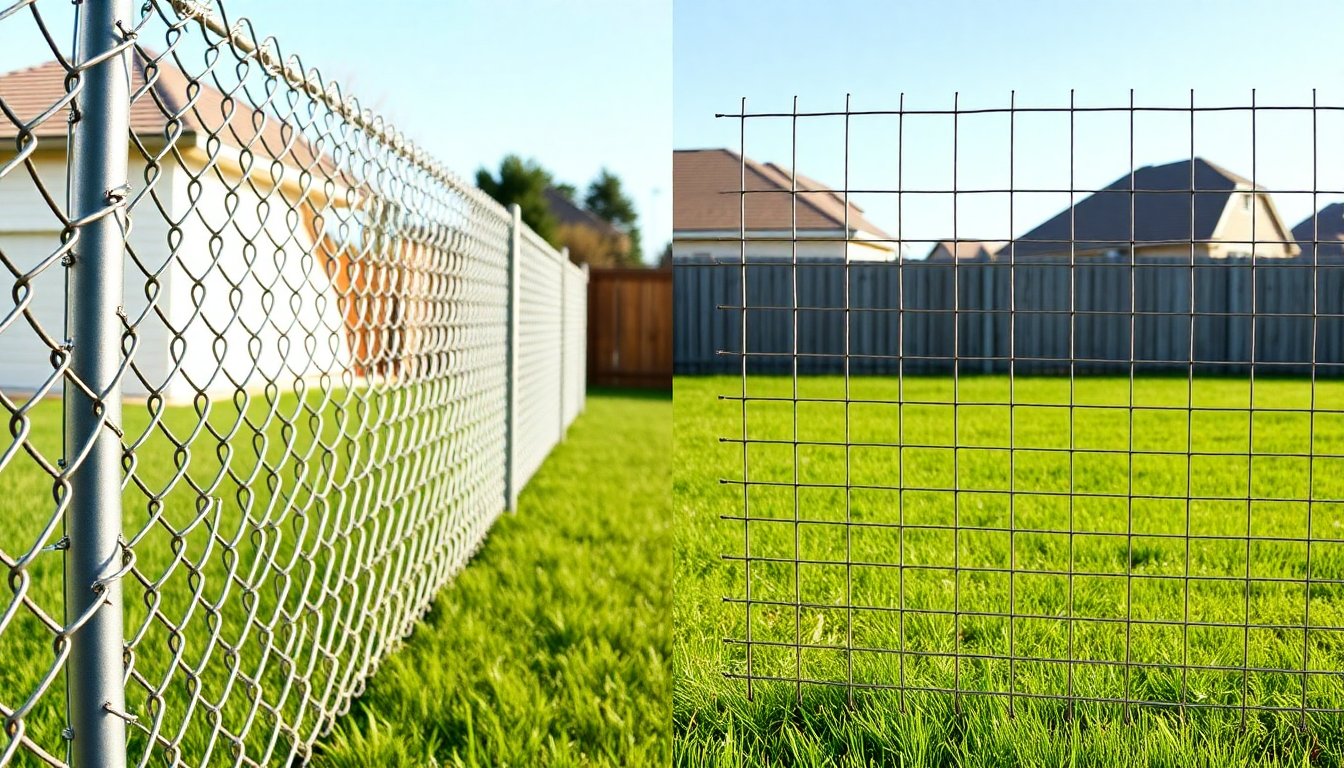
At first glance, these two fences might look similar — they’re both metal, both wire-based, and both popular for keeping things in (or out). But the way they’re built is completely different. Chain link fencing uses a woven diamond pattern of galvanized steel wire that “interlocks” together. This gives it that classic flexible, springy feel. Welded wire, on the other hand, is made from straight wires that are WELDED together at each intersection, creating a rigid grid pattern.
That single difference — woven vs welded — changes almost everything about how these fences perform. Chain link flexes and bends. Welded wire holds its shape firmly. One is great for large perimeters. The other is better for tight, secure enclosures. Here’s a side-by-side comparison to make it crystal clear.
| Feature | Chain Link Fence | Welded Wire Fence |
|---|---|---|
| Construction | Woven diamond pattern | Welded grid pattern |
| Flexibility | Flexible, springy | Rigid, holds shape |
| Typical Cost | Lower per foot | Slightly higher per foot |
| Best For | Large perimeters, commercial | Gardens, pets, small enclosures |
| Appearance | Industrial, standard | Cleaner, more uniform |
| Lifespan | 15–25 years | 10–20 years |
| Repair Ease | Easy to patch | Harder to patch |
Cost Comparison: Chain Link vs Welded Wire in 2026
Let’s talk MONEY — because for most folks, this is the deciding factor. In 2026, material and labor costs have shifted a bit, but the general rule still holds: chain link tends to be the more budget-friendly option for covering large areas, while welded wire can cost more per foot depending on the gauge and coating you choose.
That said, cost isn’t just about the fence material. You’ve got to factor in posts, gates, labor, terrain, and how much fencing you actually need. A small garden enclosure might be cheaper with welded wire (because you need less of it), while a full backyard perimeter almost always favors chain link. Here’s how the numbers generally break down.
- Chain link materials: Typically the lower-cost option for large runs — great for big yards and commercial lots.
- Welded wire materials: Can run higher per foot, especially for heavy-gauge, vinyl-coated versions.
- Installation labor: Chain link is faster to install over long distances (which can save on labor).
- Gate costs: Both work with standard gates, but chain link gate hardware is often cheaper and more widely available.
- Long-term value: Chain link usually wins on cost-per-year because it lasts longer with proper galvanizing.
- Hidden costs: Rocky or sloped terrain (common in parts of Dallas and Garland) can raise labor for BOTH types.
Bottom line? If you’re fencing a large property on a budget, chain link usually wins. If you need a smaller, tidier enclosure and don’t mind spending a little more, welded wire can be worth it.
Which Fence Is More Durable and Long-Lasting?
Durability depends on WAY more than just the type of fence. It comes down to the gauge of the wire, the coating, and how well it’s installed. Let’s break it down.
Chain Link Durability
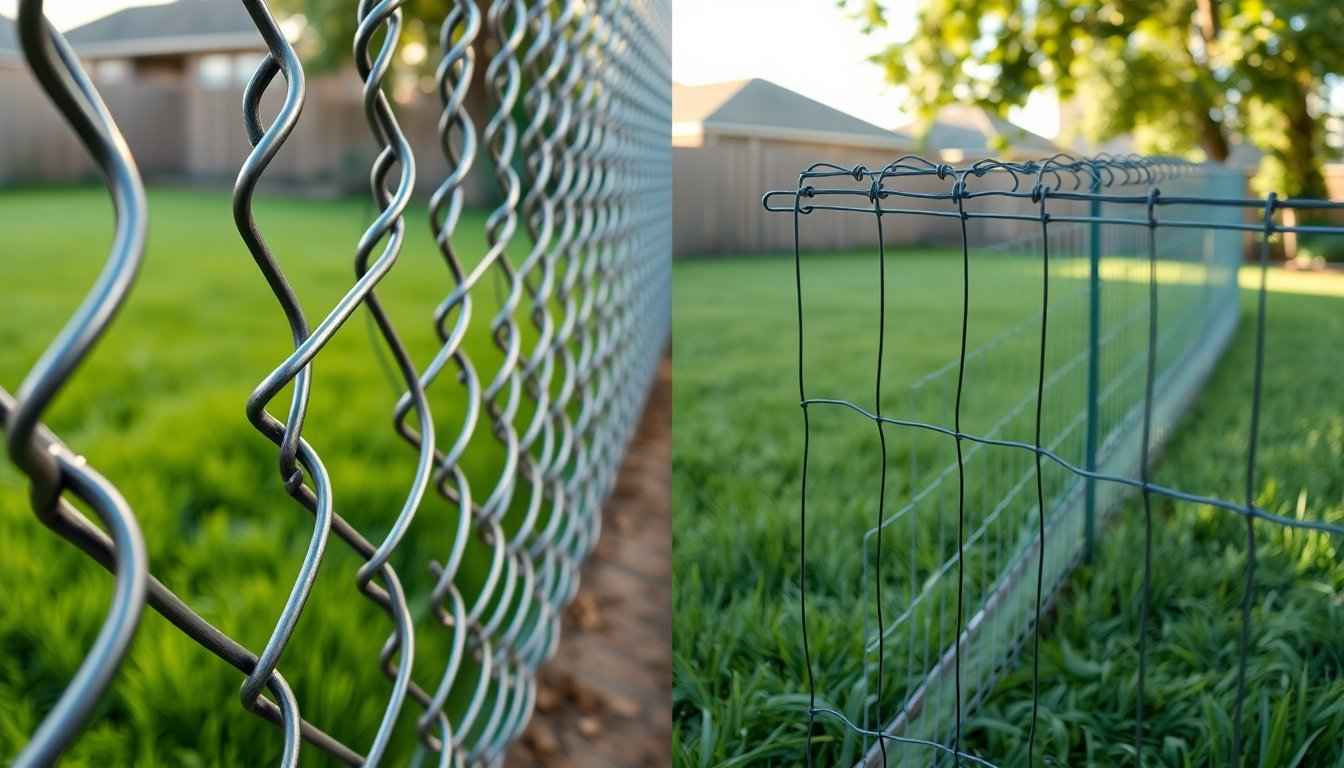
Chain link is TOUGH — no doubt about it. Because it’s woven, it can flex under impact without permanently deforming. Hit a chain link fence with a stray basketball (or a runaway lawnmower) and it usually bounces right back. Galvanized chain link resists rust for decades, and vinyl-coated versions push that lifespan even further. With proper installation, most chain link fences last 15 to 25 years here in North Texas.
Welded Wire Durability
Welded wire is rigid and strong — until it isn’t. The weak point is (you guessed it) the WELDS. Over time, especially in our Texas heat and occasional freezes, welded joints can crack or corrode. Once a weld pops, that section of fence loses its structural integrity. Higher-gauge, thick welded wire holds up better, but generally welded wire has a slightly shorter lifespan — around 10 to 20 years.
The Texas Weather Factor
Dallas weather is no joke. We get scorching summers, sudden hail, and the occasional hard freeze. Both fences handle it fine when galvanized properly — but chain link’s flexibility gives it an edge against physical impact (think hailstorms and fallen branches). Welded wire’s rigidity is great for keeping shape, but it’s slightly more prone to weld fatigue over the years.
Chain Link vs Welded Wire for Different Uses (Security, Pets, Gardens)
Here’s where things get practical. The “better” fence really depends on WHAT you’re using it for. A dog owner has totally different needs than a business securing a warehouse. Below, we’ve matched each common use case with the fence we’d typically recommend based on our experience serving Dallas, Richardson, Mesquite, and beyond.
- Security & Commercial: Chain link wins. It’s tall, tough, and can be topped with barbed wire for extra protection. Great for warehouses, storage lots, and construction sites.
- Small Dogs & Pets: Welded wire is often better. The tight, rigid grid keeps small paws (and noses) from squeezing through — and pets can’t push it out of shape as easily.
- Large Dogs: Chain link handles the jumping, leaning, and pawing of big dogs better thanks to its flexibility.
- Gardens & Landscaping: Welded wire is the go-to. It looks cleaner, keeps rabbits and critters out, and provides good support for climbing plants.
- Large Property Perimeters: Chain link — hands down. It’s the most cost-effective way to fence a big yard or acreage.
- Chicken Coops & Livestock: Welded wire’s rigid grid keeps small animals contained and predators out.
- Playgrounds & Schools: Chain link, often vinyl-coated for a cleaner look and added safety.
Still not sure which fits your needs? That’s exactly what we help our customers figure out every single day. Whether it’s a chain link fence installation for a large lot or a tidy welded wire enclosure for your veggie garden, matching the fence to the job is half the battle.
Installation and Maintenance: Which Is Easier?
Both fences are considered “DIY-friendly” compared to wood or wrought iron — but there’s a difference between EASY and easy-done-RIGHT. Poor installation is the number one reason fences sag, lean, or fail early. Here’s a simplified look at the general installation process (which our team handles from start to finish).
- Plan and mark the layout. Measure the perimeter, mark post locations, and check for underground utilities before digging.
- Set the posts. Dig holes and set terminal and line posts in concrete — this is the foundation of a strong fence.
- Let the concrete cure. Rushing this step is a huge mistake (patience pays off here).
- Attach the framework. For chain link, install top rails; for welded wire, prep the tension wires and supports.
- Roll out and attach the fencing. Chain link gets stretched and woven; welded wire gets fastened to posts and rails.
- Tension and secure. Proper tension keeps the fence taut and prevents sagging over time.
- Install gates and hardware. Finish with any gates, caps, and tie wires.
As for maintenance? Both are LOW-maintenance, which is one of their biggest selling points. Chain link just needs an occasional rinse and rust check — and galvanized or vinyl-coated versions rarely need more than that. Welded wire is similar, but you’ll want to keep an eye on those welds for corrosion, especially near the base where moisture collects. If a section gets damaged, chain link is genuinely easier to patch and repair than welded wire.
Pros and Cons of Chain Link and Welded Wire Fencing
Let’s put it all together. Every fence has trade-offs, and knowing them upfront helps you avoid regret later. Here’s our honest, no-fluff breakdown.
Chain Link Pros
- Budget-friendly for large areas
- Extremely durable and flexible (bounces back from impact)
- Fast to install over long distances
- Easy to repair and patch
- Great for security (can add barbed wire or slats)
- Long lifespan — 15 to 25 years
Chain Link Cons
- Industrial, less “decorative” look
- Diamond pattern can let small pets squeeze through
- Not the most private option (unless slats are added)
Welded Wire Pros
- Cleaner, more uniform appearance
- Rigid grid keeps small animals and pets contained
- Excellent for gardens and landscaping
- Good support for climbing plants
- Works great for chicken coops and livestock
Welded Wire Cons
- Welds can crack or corrode over time
- Slightly shorter lifespan (10 to 20 years)
- Can cost more per foot for heavy-gauge options
- Harder to repair once damaged
- Less ideal for large perimeters (cost adds up)
See the pattern? Chain link is the workhorse for BIG jobs and security. Welded wire is the specialist for smaller, tidier enclosures where appearance and small-animal containment matter most. Neither is “better” across the board — it all depends on your specific needs. And if you’re weighing your options against other materials entirely, our wood fence installation and wrought iron fence installation services offer even more possibilities for privacy and curb appeal.
Conclusion
So — chain link fence vs welded wire, which is better? The truth is, it depends on YOUR property and goals. Choose chain link for large perimeters, tight budgets, big dogs, and serious security. Choose welded wire for gardens, small pets, livestock, and a cleaner appearance on smaller enclosures. Both are durable, low-maintenance, and affordable — you really can’t go too wrong when the fence matches the job.
At King Of Kings Fence, we’ve been helping homeowners and businesses across Dallas, Richardson, Garland, Mesquite, Addison, Irving, Carrollton, and Farmers Branch pick the RIGHT fence for over a decade. If you’re ready to fence your property — or you just want a straight answer on which option fits best — reach out to our team and let’s build something that lasts. Your perfect fence is closer than you think.