Can You Install Fence Posts Without Concrete? (Proven Methods)
One of the most common questions we hear at King Of Kings Fence in Dallas is whether you can install fence posts without concrete. The short answer is YES. You absolutely can set fence posts without concrete, and in some cases it may even be the better choice for your project.
Concrete has long been the go-to for setting posts, but it is not the only way to build a strong, lasting fence. We have installed fences all over Dallas, Richardson, Garland, and beyond using proven methods that skip the concrete entirely. Let us walk you through how it works and when it makes sense.
Can You Really Set Fence Posts Without Concrete?
Yes, you can. People have been building fences long before bags of concrete were sold at every hardware store. The key is understanding what concrete does and how to replace that function. Concrete adds weight, stability, and resistance to shifting. But other materials can do the same job when installed correctly.
Setting posts without concrete works best in certain conditions. Here are the main reasons homeowners choose to go concrete-free:
- Faster installation since you skip the mixing and curing time.
- Lower cost because you buy less material.
- Easier repairs when a post needs to be replaced down the road.
- Better drainage around the post base, which can reduce wood rot.
- Less damage to your yard during the install.
- Simpler removal if you ever decide to relocate the fence.
That said, this method is not right for EVERY situation. Heavy gates, tall privacy fences in windy areas, and certain soil types may still call for concrete. We will cover those details below.
What Are the Best Alternatives to Concrete for Fence Posts?
There is more than one way to anchor a post firmly in the ground. Over the years we have tested and used several concrete alternatives, and each has its own strengths. Here are the ones we trust most.
Gravel and Crushed Stone
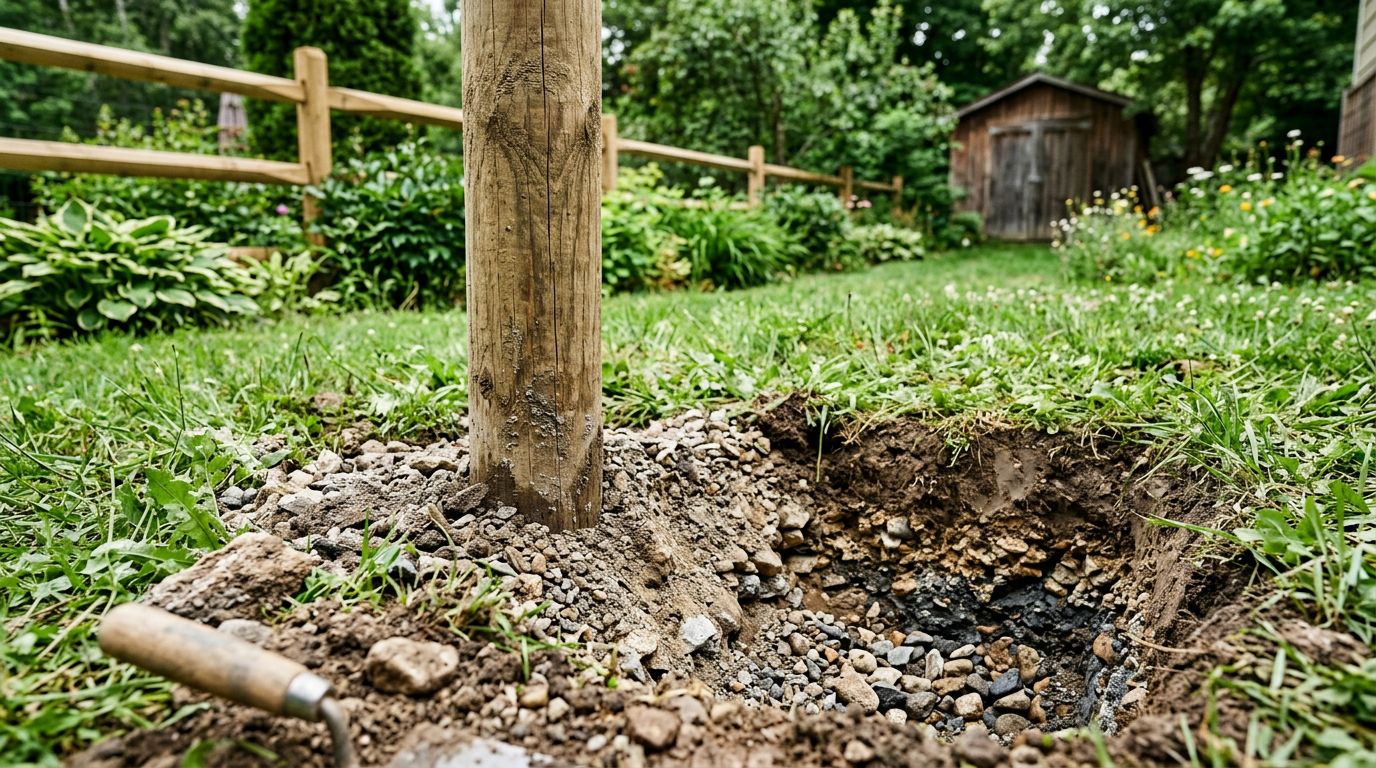
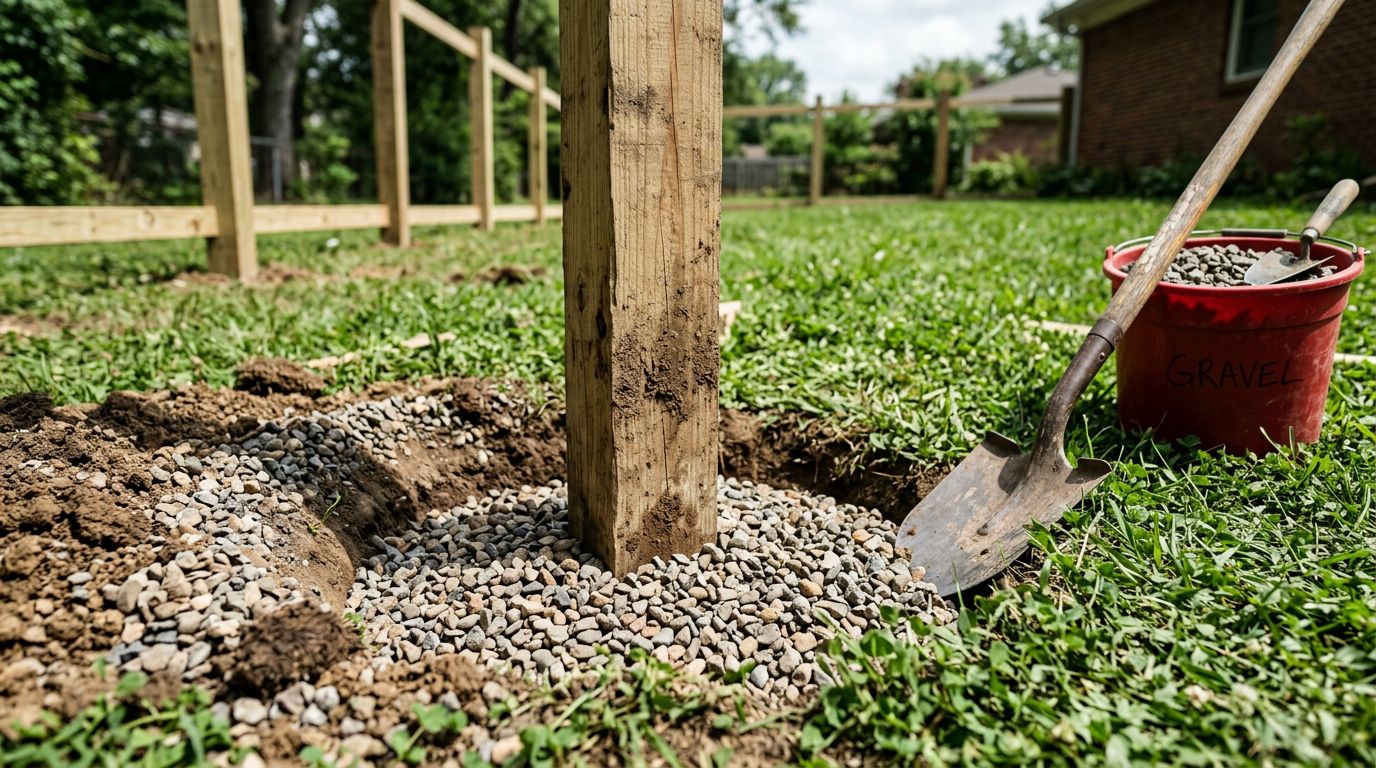
Gravel is our favorite alternative for wood posts. It packs tightly around the post and provides excellent drainage. Water flows through the gravel instead of pooling at the base, which helps the post last longer. Crushed stone with sharp edges locks together better than round pea gravel.
Tamped Soil and Backfill
The original method. You dig the hole, drop in the post, and pack the native soil back in layer by layer. Done right, tamped soil holds a post surprisingly well. It works especially well in dense clay soils common around the Dallas area.
Foam Post Backfill
Expanding foam designed for fence posts is a modern option. You pour it into the hole and it expands to fill every gap. It cures in minutes and sets faster than concrete. Foam is lightweight and easy to carry, though it costs more per post.
Driven Post Anchors and Spikes
Metal post spikes and ground anchors get driven directly into the soil. You then slide the post into the sleeve. These are fast and require no digging, but they hold best on shorter fences or in firm ground.
If you are weighing your options for a wood project, our guide on whether wood fence posts should be set in concrete breaks down the trade-offs in more detail.
How to Install Fence Posts Using Gravel and Tamped Soil
Gravel and tamped soil is the method we recommend most for concrete-free installs. It is reliable, affordable, and forgiving of small mistakes. Here is the step-by-step process we follow on job sites across Mesquite, Addison, and Irving.
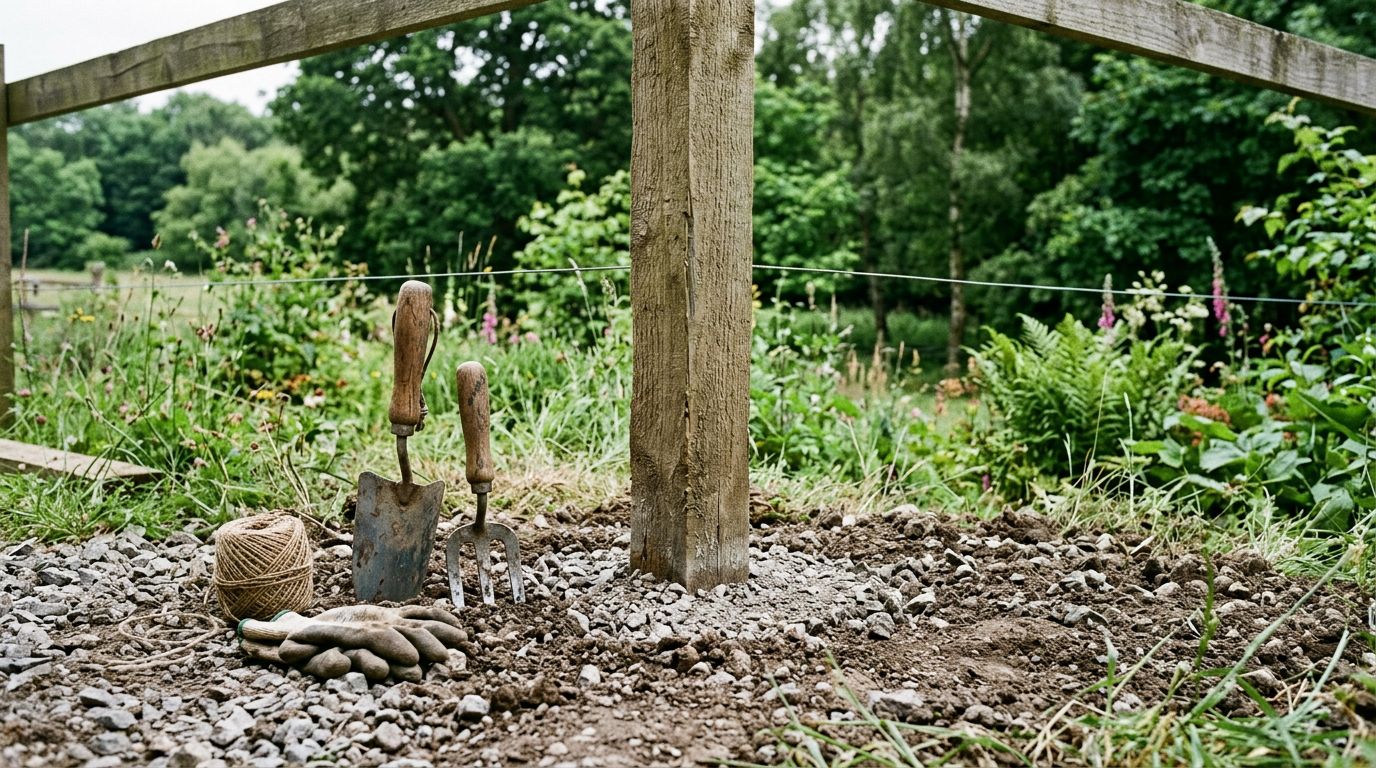
- Mark your post locations. Use string lines and stakes to keep everything straight and evenly spaced.
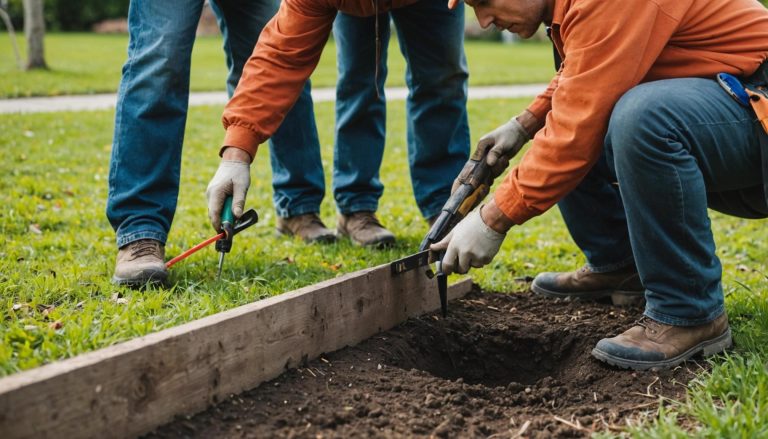
- Dig the hole. Aim for a hole about three times the width of your post. Depth matters, so dig at least one third of the post height into the ground.
- Add a gravel base. Pour four to six inches of crushed gravel into the bottom. This layer lets water drain away from the post.
- Set the post. Place the post in the center of the hole and check it with a level on two sides.
- Add gravel in layers. Pour in a few inches of gravel, then tamp it down firmly with a metal tamping bar. Repeat this process.
- Check for plumb. After each layer, recheck the level. Adjust before you tamp the next layer.
- Finish with tamped soil. Fill the top portion with native soil, packing it tightly as you go. Mound the soil slightly so water runs away from the post.
- Let it settle. Give the post a day before you attach heavy rails or panels.
The secret to this method is TAMPING. Loose fill will let the post wobble. Firm, compacted layers are what give the post its holding power. Take your time here and you will get a rock-solid result.
Which Fence Types Work Best Without Concrete?
Not every fence is a good candidate for a concrete-free install. Lighter fences with less wind resistance perform best. Heavier structures and gates usually need the extra stability that concrete provides. Here is how the common styles stack up.
- Chainlink fences are ideal. They let wind pass through, so there is little force pushing on the posts. Gravel and tamped soil hold them beautifully.
- Ranch style wood fences work well too. With open rails and lots of airflow, they do not catch much wind. Learn more in our ranch style wood fence installation guide.
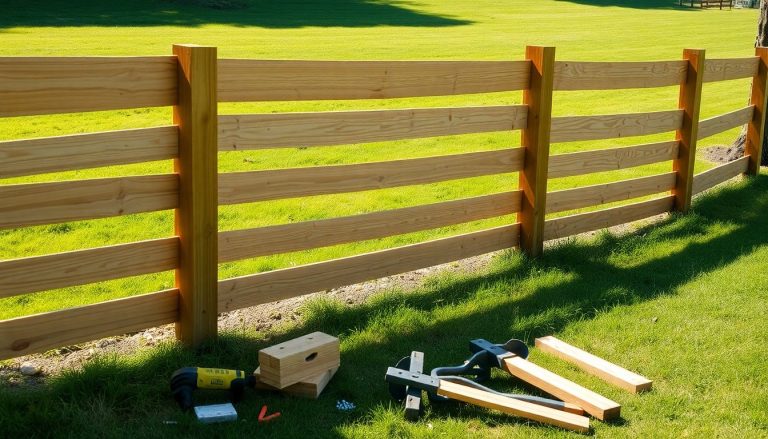
- Split rail fences are perfect for tamped soil since they are lightweight and decorative.
- Short picket fences under four feet tall are usually fine without concrete.
- Tall privacy fences are riskier. Solid panels act like a sail in the wind, so we often recommend concrete for these.
- Gate posts almost always need concrete. The constant swinging and weight put stress on the anchor point.
If you are set on a privacy fence but want to avoid concrete, we can help you weigh the options during a site visit. Soil type and wind exposure play a big role in the final call.
How Deep Should You Dig Fence Posts Without Concrete?
Depth is even MORE important when you skip the concrete. Without that heavy anchor at the bottom, you rely on depth and compaction to keep the post steady. The general rule is to bury one third of the post length. So an eight foot post should sit about two to three feet in the ground.
Here are some depth guidelines we use in the field:
- Short fences under four feet: dig at least 18 to 24 inches deep.
- Standard six foot fences: dig 24 to 36 inches deep for best hold.
- Corner and end posts: dig a few inches deeper since they carry extra load.
- Metal and wrought iron posts: follow specific depth rules based on height and design. Our article on how deep wrought iron fence posts should be installed covers this in detail.
- Frost and clay considerations: in expansive clay soils, go a bit deeper to reach more stable ground.
When in doubt, dig deeper. A few extra inches of depth make a big difference in how the post handles wind and wear over the years. It is always easier to backfill a hole that is too deep than to fix a post that keeps leaning.
Common Mistakes to Avoid When Setting Posts Without Concrete
We have seen plenty of concrete-free fences fail, and almost always it comes down to a handful of avoidable errors. Skipping concrete does not mean skipping care. If anything, it means you have to be MORE precise with your technique.
- Not digging deep enough. Shallow posts lean and wobble. Depth is your main source of stability without concrete.
- Forgetting the gravel base. Skipping the drainage layer traps water and rots wood posts from the bottom up.
- Loose, un-tamped fill. If you do not compact each layer, the post will never hold firm. Tamp, tamp, tamp.
- Using the wrong gravel. Round pea gravel shifts too easily. Choose angular crushed stone that locks together.
- Ignoring soil type. Sandy soil holds posts differently than clay. Adjust your depth and backfill to match your ground.
- Skipping the level check. A post that is off plumb at the start only gets worse. Check it at every layer.
- Setting gate posts without concrete. Gates take real abuse. Anchor these in concrete to avoid sagging.
- Rushing the job. The compaction process takes patience. Cutting corners here leads to a fence that fails early.
Avoid these pitfalls and a concrete-free fence can last just as long as a traditional one. The materials matter, but the technique matters more.
Conclusion
So can you install fence posts without concrete? Absolutely. With gravel, tamped soil, foam, or driven anchors, you can build a sturdy fence that stands up to Texas weather. The keys are digging deep, adding a solid gravel base, and compacting every layer as you fill. Lighter fences like chainlink and ranch style work great this way, while heavy gates and tall privacy panels usually still call for concrete.
At King Of Kings Fence, we install and repair fences the right way across Dallas, Richardson, Garland, Mesquite, Addison, Irving, Carrollton, and Farmers Branch. If you are planning a new fence and want expert advice on the best setting method for your yard, reach out to our team and we will help you build something that lasts.