Can You Install Chain Link Fence Yourself? (DIY Guide 2026)
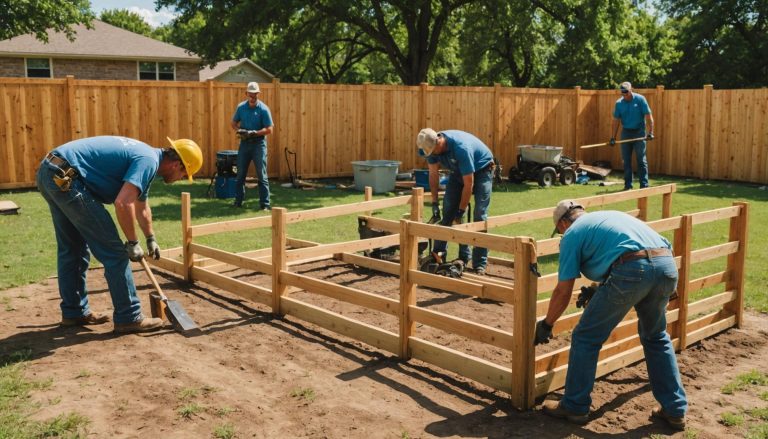
So you are thinking about installing a chain link fence yourself. Good news: it is one of the most DIY-friendly fences out there. If you can dig a hole, mix concrete, and follow instructions, you can absolutely install a chain link fence yourself and save a nice chunk of money in the process.
Here at King Of Kings Fence in Dallas, we install fences for a living, but we also believe in helping homeowners understand what they are getting into. This guide walks you through the tools, costs, steps, and mistakes to avoid so you can decide if a DIY chain link fence is right for you in 2026.
What Tools and Materials Do You Need to Install a Chain Link Fence?
Before you start swinging a shovel, you need the right gear. A chain link fence has more parts than people expect. Miss one piece and you will be making an extra trip to the hardware store halfway through your Saturday. Trust us, that is the worst. Understanding what chain link fence is made of helps you shop smarter and buy exactly what you need the first time.
Here is the full list of tools and materials you should have ready before day one:
- Chain link mesh (fabric) – the woven wire that makes up the fence body
- Terminal posts – the thicker posts for corners, ends, and gates
- Line posts – the standard posts spaced along the run
- Top rail – the horizontal pipe that runs along the top
- Tension bars and bands – to secure the mesh at ends and corners
- Tie wires – to attach the mesh to posts and rail
- Post caps and rail ends – the finishing pieces
- Concrete mix – for setting the posts
- Tension wire – for the bottom of the fence
- Post hole digger or power auger
- Shovel and wheelbarrow
- Tape measure and mason line (string)
- Level
- Pliers and a come-along or fence stretcher
- Hacksaw or pipe cutter
- Work gloves and safety glasses
Renting a power auger is a smart move if you have more than a handful of holes to dig. Your back will thank you.
How Much Does It Cost to Install a Chain Link Fence Yourself vs Hiring a Pro?
Money is usually the number one reason people go the DIY route. And chain link is already one of the cheapest fence types you can buy. Doing it yourself saves on labor, but you still pay full price for materials and any tool rentals. Hiring a pro costs more up front, but you get speed, warranty, and zero guesswork. If you want a sense of professional pricing in the area, our team offers chain link fence installation across North Texas with clear estimates.
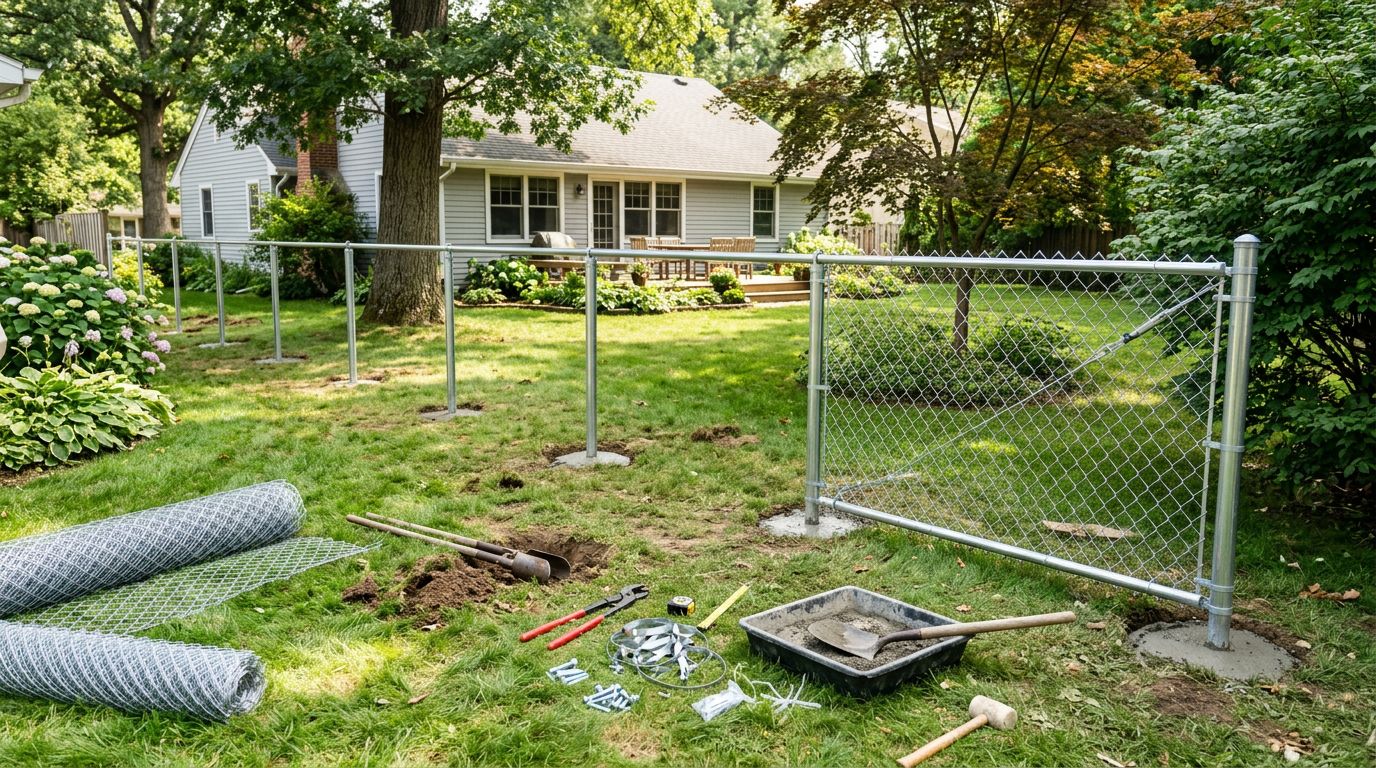
Here is a rough side-by-side comparison for a standard 150-foot chain link fence. Prices vary based on height, gauge, and your yard conditions.
| Cost Factor | DIY Install | Hiring a Pro |
|---|---|---|
| Materials | $700 – $1,500 | Included in quote |
| Labor | $0 (your time) | $1,200 – $2,500 |
| Tool rental | $50 – $150 | $0 |
| Total estimate | $750 – $1,650 | $2,000 – $4,000 |
| Time investment | 1 – 3 weekends | 1 – 2 days |
| Warranty | None | Usually included |
The bottom line: DIY can save you $1,000 or more. But that savings only matters if the fence is straight, level, and holds up over time. A crooked DIY fence that sags in a year is not a bargain.
How to Install a Chain Link Fence Step by Step
Alright, here is the part you came for. Installing a chain link fence follows a clear order. Do NOT skip steps or rush the concrete curing. One of the biggest questions homeowners ask us is whether posts really need concrete, and the short answer is yes. You can learn more about why in our guide on setting fence posts in concrete, and the same logic applies to chain link.
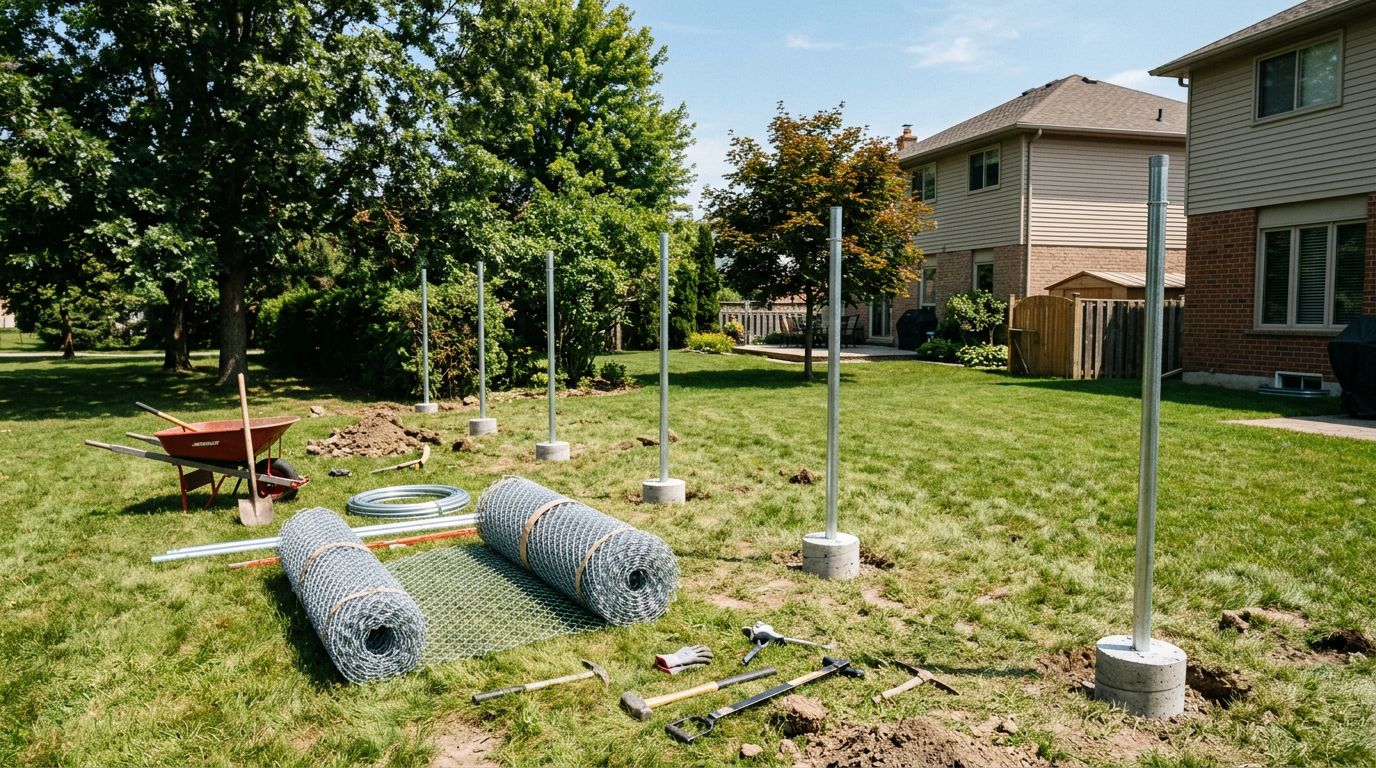
Follow these steps in order for a clean, sturdy result:
- Plan and mark your layout. Call 811 first to locate underground utilities. Then mark your corners and run mason line between them to keep everything straight.
- Mark post locations. Space line posts no more than 10 feet apart. Terminal posts go at every corner, end, and gate opening.
- Dig the post holes. Terminal post holes should be wider and deeper than line post holes. Aim for about a third of the post length underground.
- Set the terminal posts in concrete. Level them, brace them, and let the concrete cure. This is the foundation of the whole fence.
- Set the line posts. Use your mason line to keep the heights and alignment consistent. Let them cure fully, usually 24 to 48 hours.
- Attach post caps and rail ends. Put caps on line posts and loop caps or rail ends on terminal posts.
- Install the top rail. Slide the top rail through the loop caps and connect the sections. Cut the final piece to length.
- Run the tension wire. String it along the bottom of the fence line and secure it to the terminal posts.
- Unroll and attach the mesh. Stand the fabric up against the posts. Thread a tension bar through the first row and bolt it to the terminal post with tension bands.
- Stretch the mesh tight. Use a come-along or fence stretcher to pull the fabric taut before securing the other end. This step makes or breaks the look.
- Secure the far end. Insert another tension bar and attach it to the terminal post.
- Tie it all off. Use tie wires to fasten the mesh to the top rail and line posts every foot or so.
- Hang the gate. Install gate hardware, hang the gate, and check that it swings and latches smoothly.
Take your time with the stretching and tying. That is where DIY fences usually go wrong.
How Long Does It Take to Install a Chain Link Fence?
Time is the hidden cost of DIY. A pro crew knocks out a typical residential fence in a day or two. As a first-timer, you should plan for a lot longer, mostly because of concrete curing time and the learning curve on stretching the mesh.
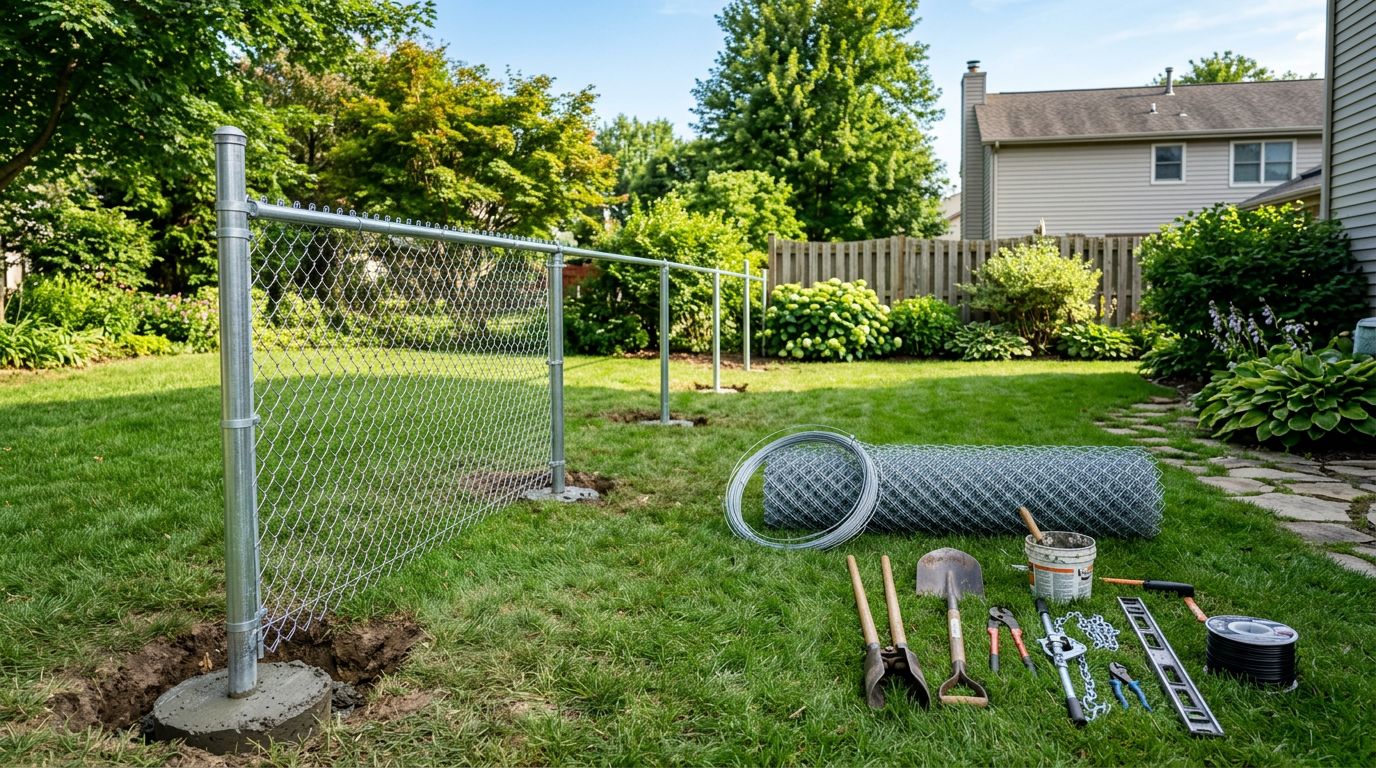
Here is a realistic timeline breakdown for a DIY project:
- Planning and marking: 2 to 4 hours
- Digging holes: half a day to a full day depending on soil
- Setting posts: 3 to 5 hours, plus 24 to 48 hours curing
- Installing rails and tension wire: 2 to 4 hours
- Hanging and stretching mesh: half a day for beginners
- Gate installation: 1 to 2 hours
All in, a DIY chain link fence usually takes two to three weekends when you factor in curing time between steps. Dallas heat can speed up concrete curing, but do not rush it. Hard clay soil in our area can also slow down digging, so give yourself extra time.
Do You Need a Permit to Install a Chain Link Fence?
Permits are one of those boring but important details people love to skip. Skipping them can cost you fines or force you to tear the fence down. Rules vary by city, so check before you dig.
When a Permit Is Usually Required
Many cities require a permit once your fence passes a certain height, often 6 or 7 feet. Fences near property lines, corner lots, or drainage areas may also need approval. If you live in Dallas, Richardson, Garland, or Mesquite, contact your local building department to confirm the current rules.
Check Your HOA Rules Too
Even if the city says yes, your homeowners association may have its own restrictions. Some HOAs limit fence types, colors, and heights. Chain link is sometimes restricted in front yards, so read your covenants carefully before you buy materials.
Property Lines and Setbacks
Always know EXACTLY where your property line is before installing. Building even a few inches over the line can create disputes with neighbors. A survey or plat map removes the guesswork. When in doubt, set the fence slightly inside your line.
Utility Locating Is a Must
This one is not optional. Call 811 before you dig anywhere. It is free, and it prevents you from slicing into a gas or electric line. This is a safety step, not just a legal one.
Common Mistakes to Avoid When Installing a Chain Link Fence
We have been called out to fix plenty of DIY fences over the years. Most problems come down to a few repeat mistakes. Learn from them and your fence will look great and last for decades. If you hit a wall midway through, professional fence repair or installation is always an option.
Here are the most common chain link mistakes we see:
- Skipping the concrete on posts. Posts set in dirt alone will lean and loosen fast. Terminal posts especially need a solid concrete footing.
- Spacing posts too far apart. Going beyond 10 feet between line posts causes sagging top rails and loose mesh.
- Not stretching the mesh tight enough. Loose fabric looks sloppy and ripples in the wind. Use a proper stretcher.
- Ignoring utility lines. Failing to call 811 can be dangerous and expensive.
- Setting posts at uneven heights. Always use a mason line as your guide so the top stays level.
- Rushing the concrete cure. Attaching rails or mesh before posts are set will pull them out of alignment.
- Buying the wrong gauge mesh. Thinner wire is cheaper but bends and dents easily. Match the gauge to your needs.
- Forgetting tension bars. Without them, the mesh has nothing solid to grip at the ends.
- Poor gate alignment. A gate that drags or will not latch usually traces back to crooked or unlevel gate posts.
Avoid these and you are ahead of most weekend warriors. A little patience goes a long way with chain link.
Conclusion
Yes, you can install a chain link fence yourself. It is one of the most beginner-friendly fence projects, and the savings can be real. The keys are simple: gather the right tools, set your posts in concrete, keep everything level, stretch the mesh tight, and never skip the 811 call or your local permit check.
That said, DIY takes time and patience, and mistakes can be costly to fix. If you would rather have it done fast, straight, and backed by a warranty, King Of Kings Fence proudly installs chain link and other fences across Dallas, Richardson, Garland, Mesquite, Addison, Irving, Carrollton, and Farmers Branch. Whether you tackle it yourself or call in the pros, now you know exactly what it takes to get the job done right.